
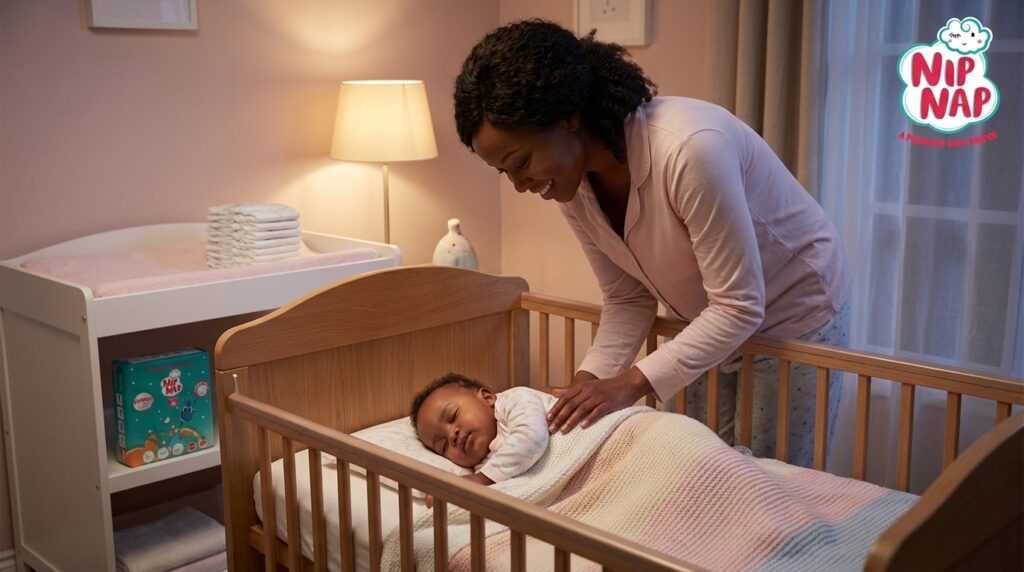
It usually starts around 2 or 3 in the morning. You hear the baby stirring — not the hungry cry, but that unsettled fussing that tells you something is wrong. You reach over, pick them up, and feel it immediately. The vest is wet. The sheet is wet. Everything needs changing, and now both of you are wide awake.
Night-time nappy leaks are something almost every Kenyan parent deals with at some point, yet so many assume it is simply the way things are. It is not. In most cases, there is a clear reason why the leak happened — and a straightforward way to stop it from happening again. This guide walks you through the main causes and what you can actually do about them.
What Actually Causes Diaper Leaks at Night?
Daytime leaks are irritating. Night-time ones are a different category of problem entirely. The baby has been in the same diaper for hours. There is more urine to deal with. And the consequences — disrupted sleep, wet bedding, irritated skin — are harder to recover from at midnight than at noon.
So what are the main causes of diaper leaks at night? There are several, and they often work together.
The Size Is Off
This one is more common than most parents realise. A nappy that fitted perfectly three weeks ago may now be quietly failing. Babies grow fast, and a nappy that is even slightly too small will leave gaps at the legs — gaps that urine finds quickly during the night.
Going too large creates the same problem in reverse. The waist and leg openings become loose, and there is nothing to contain the leak. Getting the size right is not a one-time decision. It needs revisiting regularly. A good
A diaper size guide for babies takes the guesswork out of it and gives you specific indicators to watch for as your child grows.
The Diaper Simply Cannot Hold Enough.
Standard nappies are built for daytime use — relatively short periods and frequent changes. At night, the same diaper may need to perform for eight, nine, ten hours. Many cannot manage that. Once the nappy absorption level is maxed out, leaking is not a possibility; it is a certainty.
This is one of the most overlooked reasons why parents keep experiencing leaks even when the size seems correct. The issue is not the fit — it is the capacity.
Kenya’s Climate Plays a Role Too
Kenya’s humidity – particularly along the coast and in lowland areas – affects how nappies behave. In more humid conditions, the outer layers of a nappy can become damp from the environment before they even need to manage internal moisture. Breathable baby nappies are specifically designed to handle this. Non-breathable alternatives trap heat and dampness, which not only irritates the baby’s skin but can accelerate the breakdown of the absorbent core.
How the Baby Sleeps
A baby who sleeps flat on their back presents a different challenge to one who rolls onto their side or stomach — which is most babies by a few months old. Nappies are structured to absorb from the front and back when lying flat. When a baby is curled up on their side, the distribution changes. The nappy may work perfectly in one position and fail entirely in another. If your baby is a restless sleeper, this is likely contributing to your night-time leak problem.
Material Quality Under Prolonged Pressure
Some nappies simply are not made to last through a night. The absorbent core clumps, the inner lining loses its structure, and the leg elastics soften and pull away from the skin. A nappy that looked fine at 8 p.m. can be functionally compromised by 2 a.m.
This is worth keeping in mind when choosing affordable nappies in Kenya. Cost matters — of course it does — but the cheapest option is not always the most economical one if it means waking up for a full sheet change at 3 in the morning.
No Airflow Through the Material
This matters more than it might seem. When there is no airflow, heat and moisture accumulate against the baby’s skin, which creates discomfort, increases the risk of nappy rash, and gradually weakens the nappy’s ability to function properly. Breathable baby nappies solve this by allowing gentle air circulation whilst keeping moisture locked in.
How to Prevent Night-Time Diaper Leaks: Practical Steps
There is no single fix that works for every baby. But there are a few adjustments that, taken together, make a significant difference. Here is how to prevent nappy leaks at night in a way that actually holds up over time.
Sort Out the Fit First
Before you do anything else, check the fit. Lay the baby down and run a finger along the leg cuffs — they should sit snugly but without pressing into the skin. The waist should be secure without bunching. If you are finding red marks after you remove the diaper, it is too tight. If the leg openings feel loose at all, go up a size. Our nappy size guide for babies is a useful reference when you are not sure which way to go.
Use a Diaper Designed for Night Use.
This is probably the most impactful change you can make. A baby nappy for night use in Kenya is a different product to a standard daytime nappy. It has a higher diaper absorption level, a denser or multi-layered core, and is built to perform across several hours without breaking down. Overnight diaper protection is a specific design requirement — and it makes a real difference when the product is engineered with that in mind.
Change Just Before Sleep — Not During the Routine
Many parents put the fresh nappy on during the bath and bedtime routine, which may be thirty or forty minutes before the baby actually falls asleep. By the time the baby is down, the nappy has already been in use for a while. Putting the nappy on right at the end — just before you lay the baby down — means you start the night with full absorption capacity.
Think About Skin Protection Too
A leaking nappy and skin irritation tend to go together. Prolonged exposure to moisture, even from a well-performing nappy, can cause redness. Diaper rash prevention in Kenya is something worth taking seriously — a good barrier cream applied before sleep adds a layer of protection against any moisture that does reach the skin. You can find more on this in our parenting guides.
Double-check the positioning.
A nappy that is slightly twisted, or where the leg cuffs have folded inward, will almost always leak regardless of how good the product is. Take an extra few seconds when putting the diaper on: pull the back panel up high enough to cover the lower back, face leg cuffs outward on both sides, and fasten tabs evenly. It is a small thing that makes a consistent difference.
What to Look For in the Best Overnight Nappies in Kenya
Not all overnight nappies are created equal, and the market in Kenya has grown enough that the choice can feel overwhelming. Here is what separates the best overnight nappies in Kenya from products that simply carry the overnight label without truly delivering on it.
Absorption capacity is the most important factor. The nappy needs to handle a full night’s output — realistically, that means a product built for extended wear, not a standard nappy with a slightly thicker core. Look at the nappy absorption level stated on the packaging and compare it against the hours of protection claimed.
Leak-proof nappies in Kenya should feature reinforced leg cuffs and a contoured core that holds its structure throughout the night. A flat or poorly shaped core works fine for an hour or two but starts to fail as the night goes on and the baby shifts position.
Breathable baby nappies are not a luxury — in Kenya’s climate, they are a practical necessity. A breathable outer layer keeps air circulating, reduces heat build-up, and helps maintain the integrity of the absorbent core through the night.
Why NipNap Works for Kenyan Families
NipNap nappies in Kenya were developed with these specific needs in mind. The absorbent core is designed for extended overnight use, and the breathable outer layer is suited to Kenya’s varied climate conditions. For families with toddlers and older babies, our Kenya baby diaper pants offer a pull-up style that is easier to manage for active sleepers — and the fit stays secure even when the child moves around during the night.
We know that cost is a real consideration for most families. That is why NipNap is priced to be genuinely accessible without cutting corners on the things that matter: absorption, breathability, and fit. Being among the most affordable nappies in Kenya does not mean being inferior — it means being designed for the realities of family life here.
The Broader Picture: Infant Skin Health and Hygiene
It is worth noting that the importance of good nappy hygiene extends beyond sleep. UNICEF Kenya’s guidance on early childhood care highlights that protecting infant skin health during the first years of life supports overall development and reduces the risk of secondary infections. The World Health Organization similarly emphasises basic hygiene practices as foundational to infant wellbeing. The choices you make around nappies — what to buy, how to use them, when to change them — are a real part of that picture.
To Sum Up
Nighttime nappy leaks are frustrating, but they are solvable. Most of the time, the cause is something specific — a sizing issue, an absorption shortfall, or a fit problem — and once you identify it, you can fix it. The right baby nappy for night use in Kenya, applied correctly and changed just before sleep, with proper overnight nappy protection, takes most of the risk out of the equation.
If you have been waking up to wet sheets regularly, it is worth revisiting both the product you are using and how you are using it. Small adjustments often make a significant difference – and a full night’s sleep, for both you and your baby, is worth the effort of getting it right.For more on choosing the right products and practical parenting advice, read more parenting advice on our blog.